For a few nights now,
they're scared of the dark.
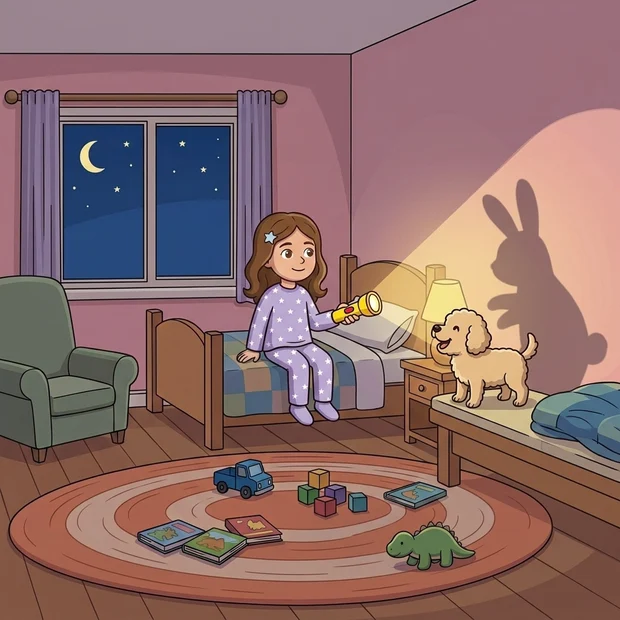
A short book where they're the one who picks up the flashlight, shines it on the big shadow on the chair, and finds their coat. Not a cure: one more story, next to the nightlight and the routine. Further down, what helps starting tonight — book or no book.
- First book free
- No credit card
- Written in real Quebec French
"Why is my kid suddenly scared of the dark?"
Most of the time, because of their age. Around 3, fear of the dark is one of the most common fears, along with monsters and noises they don't recognize. Before 5, a child has trouble telling what they imagine from what's real: at night, the shadow of a stuffed toy can turn into a monster. The fear is real, even if the monster isn't.
The monster turns back into a coat.
Naître et grandir, Quebec's go-to parenting reference, puts it plainly: stories, even slightly scary ones, help a child put words to what they feel, and a hero who comes through it helps them find their own courage. A child who asks for the same book night after night is often working through the fear.
In the book I made for this page, Rosalie doesn't hunt a monster — pretending to chase the monster away tells a child it exists. She shines her flashlight on the shadow and finds her winter coat. Then the big green plant. Then she makes a shadow of her own with her hands, and this time she's the one who decides what it looks like.
The book doesn't make the fear go away. It gives them something to do with it.
"There's nothing there. Go to sleep."
"Rosalie picks up her flashlight. All by herself."
What's actually inside
Your child, and their pet
Their name, their age, their face — and their dog or cat, if it's in the troupe. The troupe is made once and comes back in every book after this one.


Shadows, not monsters
Every shadow turns back into an ordinary thing in their room. The story starter says so in as many words, and you read the text before the pictures to make sure.
An ending where they fall asleep
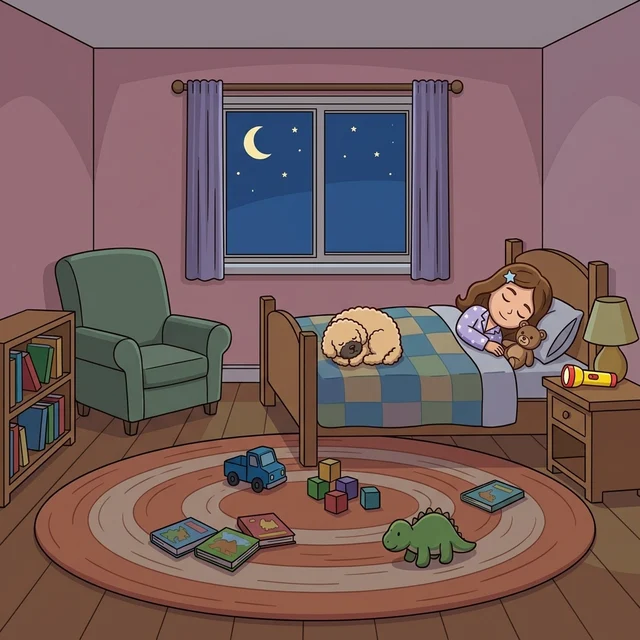
The flashlight goes off, the shadows go soft again, they fall asleep. The book ends where you'd like the evening to end.
At worst, a coat on a chair.
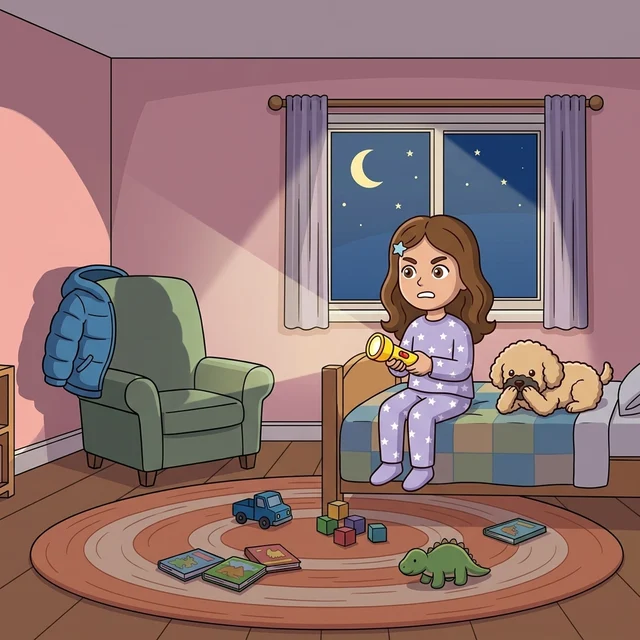
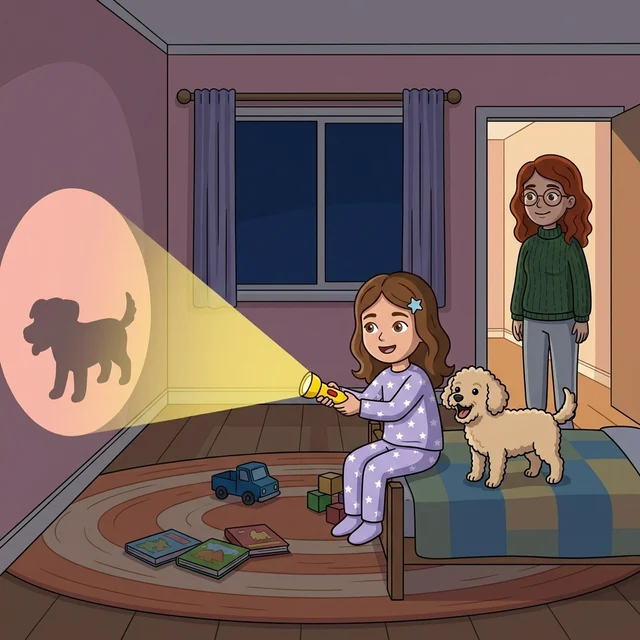
Three pages from the real book. The tensest moment is this one: a big shadow on the chair, Biscuit hiding his nose, Rosalie picking up her flashlight. No page in the book draws a monster. Then she makes a shadow of her own, and falls asleep.
Three steps, with their own shadows
Create their character — and their dog's or cat's, if you want the pet in the book. A written description is enough; photos are optional and are never kept on my side.
The story starter is already written. Swap the coat on the chair for whatever makes shadows in their room: the closet door, the bathrobe on the hook, car headlights sweeping across the ceiling.
Read the text before the pictures. If a line might scare them more than it helps — in the demo book, maybe the one about long pointy fingers — you take it out before a single illustration exists.
What helps, starting tonight
You don't need to buy anything for this part. Here's what the people who do this for a living recommend — worth trying tonight, whether or not you ever buy anything from me.
Take the fear seriously
No "oh, come on", no teasing, even if it seems unfounded to you. Tell them you understand, help them name what scares them — without pushing them to be brave before they're ready.
A nightlight, a flashlight
A small nightlight they decide to turn on or not, and a flashlight by the bed they can switch on when they need it. The flashlight gives them a bit of control over the dark.
No monster hunting
Pretending to chase it away, or checking under the bed every night, tells them it exists. Look under the bed once together if you need to, then say it plainly: monsters live in books and movies.
Same routine, same time
Bath, story, cuddle, in the same order. In the hour before bed: no screens, and no stories or games that wind them up or worry them.
Door ajar, you nearby
Leave the door ajar and keep doing your things close by, so they can hear you. You can also promise to check on them once they're asleep — then do it.
Talk about it in the daytime
Draw the fear, play it out with figurines, make up a story that ends well. In daylight they feel more in control than at 9 p.m. in the dark.
A summary of what Naître et grandir (Quebec's parenting reference, in French: "Les peurs au coucher", "La peur chez les enfants", "Les troubles du sommeil"), the Canadian Paediatric Society (Caring for Kids) and the American Academy of Pediatrics (HealthyChildren.org) say. I'm not a specialist — they are.
What this doesn't do
the part nobody else puts on their page ✎
- It doesn't fix fear of the dark in one night. For most kids it fades with time and a parent's support; the book can go along with that, not replace it.
- It doesn't replace the nightlight, the routine, or you on the edge of the bed. It's one more tool, not the main one.
- It doesn't draw their actual room: the room comes from your description. The shadows you name, yes.
- If nightmares or night terrors come back almost every night, or the fear lasts, gets worse or spills into their days, a generated book is not the tool. Talk to their doctor or your CLSC, or call 811 (Info-Santé or Info-Social, in Quebec).
Ordinary questions
At what age does fear of the dark start?
Often between 2 and 4, according to Naître et grandir. Around 3, it's one of the most common fears, along with monsters and noises a child doesn't recognize, and bedtime fears stay common until 5 or 6. Before then, a child still has trouble telling what they imagine from what's real.
Does a nightlight help?
Often, yes. Naître et grandir suggests a small nightlight the child chooses to turn on or not — it doesn't need to be on every night — and a flashlight by the bed they can switch on when they need it. The Canadian Paediatric Society also mentions a nightlight, or simply leaving the door open.
How can a book help?
It doesn't make the fear go away. It can help them put words to it, show them a hero who comes through it, and give them something to do — here, shine a light on the shadow and find out what it really is. A child who asks for the same book night after night is often working through the fear. The library has good ones; the only thing Toupie adds is that the hero is your kid.
Can a book about fear of the dark make it worse?
It can, and it's worth thinking about. Naître et grandir notes that slightly scary stories aren't harmful, but suggests reading them at some other time than right before bed. This one is written for bedtime, but read it in the daytime the first time. And since you read the text before the pictures, you can take out anything that feels like too much.
Nightmare or night terror: how do you tell them apart?
A nightmare tends to come late in the night: the child wakes up, looks for you, can tell you the dream, and needs reassurance. A night terror tends to come an hour or two after they fall asleep: they scream, seem awake but aren't, don't recognize you and may push you away. Don't try to wake them; stay close so they don't get hurt. If either keeps happening almost every night for months, talk to their doctor.
Tonight, the nightlight. Tomorrow, maybe a book.
First book is free, no card. The story starter is already written — just add the shadows in their room.