Monday, it's daycare.
And at four, you're back.
A short book where the hero is your child, in their first week at daycare. Not to stop the tears at drop-off — there may be tears anyway. To give them a story that always ends the same way: you come back.
- First book free
- No credit card
- Written in real Quebec French
"Will they understand that I'm coming back?"
It's not the list of things to pack that keeps you up. It's the moment you turn your back to the door. That's where this one starts.
What they already know is less scary.
Naître et grandir puts it simply: a child who knows how the day will go feels safer. The coat hook, the snack, the nap, the moment you walk in. Visiting beforehand, reading books about daycare, talking through the routine — it's what every parent is told, and it's why everyone around you is about to recommend a book.
The trouble with the one from the bookshop: the hero is called Theo, his daycare looks nothing like theirs, and his mum shows up on the last page with no telling when. Your child has their own comfort toy, their own way of saying bye, and that bye is the one they need to rehearse.
That's the one thing Toupie adds: the hero is your kid, with their own thing from home and your own goodbye. The rest — a day that gets longer a little at a time, a parent who comes back as promised — is what good daycare books already do.
"Theo goes to daycare. Theo is scared. Then Theo has fun."
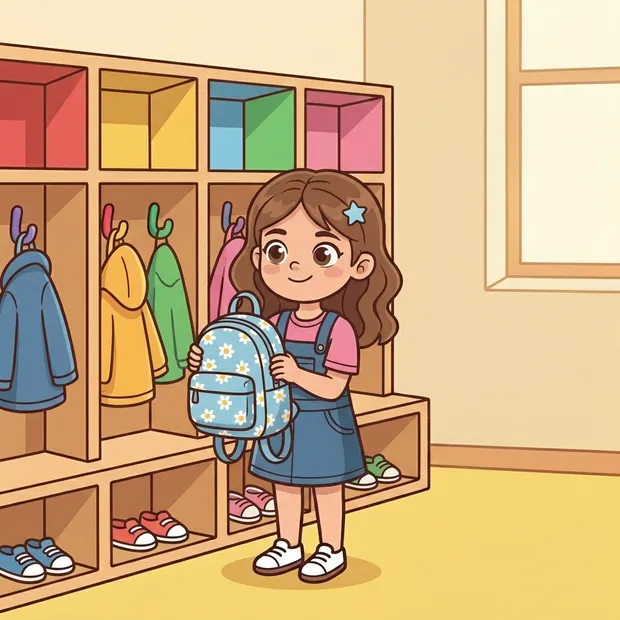
"It's the first day at daycare. Mum shows Rosalie a little coat hook. There's a butterfly sticker on it."
What's actually inside
Your child, for real
Their name, their age, their face. The troupe is made once and comes back in every book after this one — so this book isn’t a one-off.


One week, a little at a time
An hour, then a morning, then a real day with a nap. The book follows the same pace as the gradual start, so the long day never comes as a surprise.
Something to hold, and a return
A thing from home in their pocket, the same words every morning, and an ending that never changes: the parent comes back.
You read the words before a single picture exists.
The story comes first. If it isn't right, you redo it — it costs nothing, and no illustration has been drawn yet.
Aujourd'hui, c'est la grande journée. Avec le dodo. La lumière est douce, tout est silencieux. Rosalie est couchée sur un petit lit bleu. Son ventre fait encore des petites vagues.
Elle sort le petit mouchoir jaune. Elle le met contre sa joue. Ça sent la maison. Rosalie ferme les yeux… Et quand elle les rouvre, Maman est assise à côté d'elle. « Je reviens toujours », dit maman.
Three steps, about fifteen minutes
Create their character. A written description is enough; photos are optional and are never kept on my side.
The story starter for this moment is already waiting in the box. Change it, cut it, rewrite the whole thing if you like.
Read the text before the pictures. If the story isn't right, you redo it before a single illustration exists.
What helps, besides a book
A book is a way in. Here's what the people who actually study this recommend around it — useful whether or not you ever buy anything from me.
Go see it first
Walk past it, go in once together, see the coat hook and the nap corner. What they've already seen with you, they don't have to discover alone.
Always the same goodbye
The same gestures every morning, short and clear — and never sneaking out. A goodbye they know by heart gives them a handle on the moment.
Say when, in their words
"I'll be back after nap," not "in five minutes" when it's six hours. They can't tell time, but they know what comes after snack.
Something from home
A comfort toy, a family photo, a little something of yours. Ask the educator where it can stay during the day.
Tears at pickup are normal
Crying when you walk in, waking at night, asking for the soother again: all on the list of expected reactions. Settling in often takes two to four weeks, sometimes longer.
Don't stack the changes
Not the time to drop the soother or start potty training. One big new thing at a time is already plenty.
A summary of what Naître et grandir, the American Academy of Pediatrics and the Child Mind Institute say. I'm not a psychologist — they are.
What this doesn't do
the part nobody else puts on their page ✎
- It won't stop the tears on Monday morning. It gives them a story that ends the way their day will end: you come back.
- It doesn't replace the gradual start, or the chat with the educator at the end of the day.
- If your child is going through something heavier than a change in routine — a death, a hospital stay, a hard separation — or if settling in still isn't happening after several weeks, a generated book is not the tool. Talk to the educator, your CLSC or your family doctor.
Ordinary questions
When should we read it?
In the week or two before the first day, then at bedtime during the settling-in weeks. If they ask for it every night, let them: it's the routine they're learning.
My child is barely one. Too young?
At twelve months they won't follow a plot the way a three-year-old does. The text adjusts to the age you give the character — at one or two it's picture-words, sounds and repetition, almost no dialogue. The line that comes back at every goodbye is the part that does the work.
Who picks them up in the story?
The starter says "the parent", not "mum". Put the grown-up who really does pickup in the story — dad, mum, grandma — and write it into the starter to be sure.
Is the educator drawn?
Yes, as a side character drawn from the text alone — not to look like the real one. If you like, write their first name into the starter.
What does it cost?
The first book is free, no credit card. You see the full text before deciding whether to go on.
Start with the character.
First book is free, no card. The story starter is already written — you just make it yours.